Nexen GridTech at Solar & Storage Live Paris 2026
On 14 and 15 October, Nexen GridTech was at Solar & Storage Live Paris in Le Bourget, meeting installers, manufacturers and developers of battery projects under 1 MW.
Read the article22 articles
On 14 and 15 October, Nexen GridTech was at Solar & Storage Live Paris in Le Bourget, meeting installers, manufacturers and developers of battery projects under 1 MW.
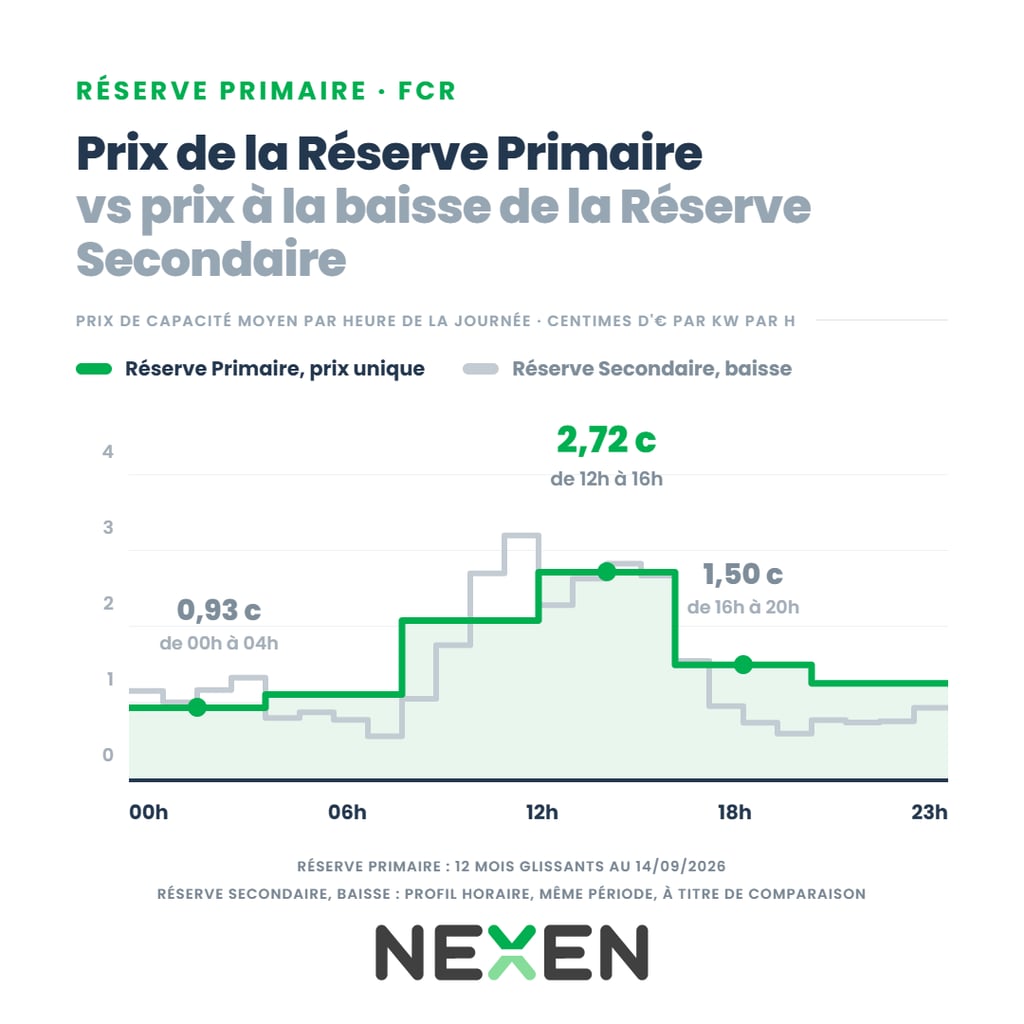
Read the articleThe primary and secondary reserves both bring grid frequency back to 50 Hz, but neither at the same speed nor for the same pay. A comparison of hourly prices over twelve months.
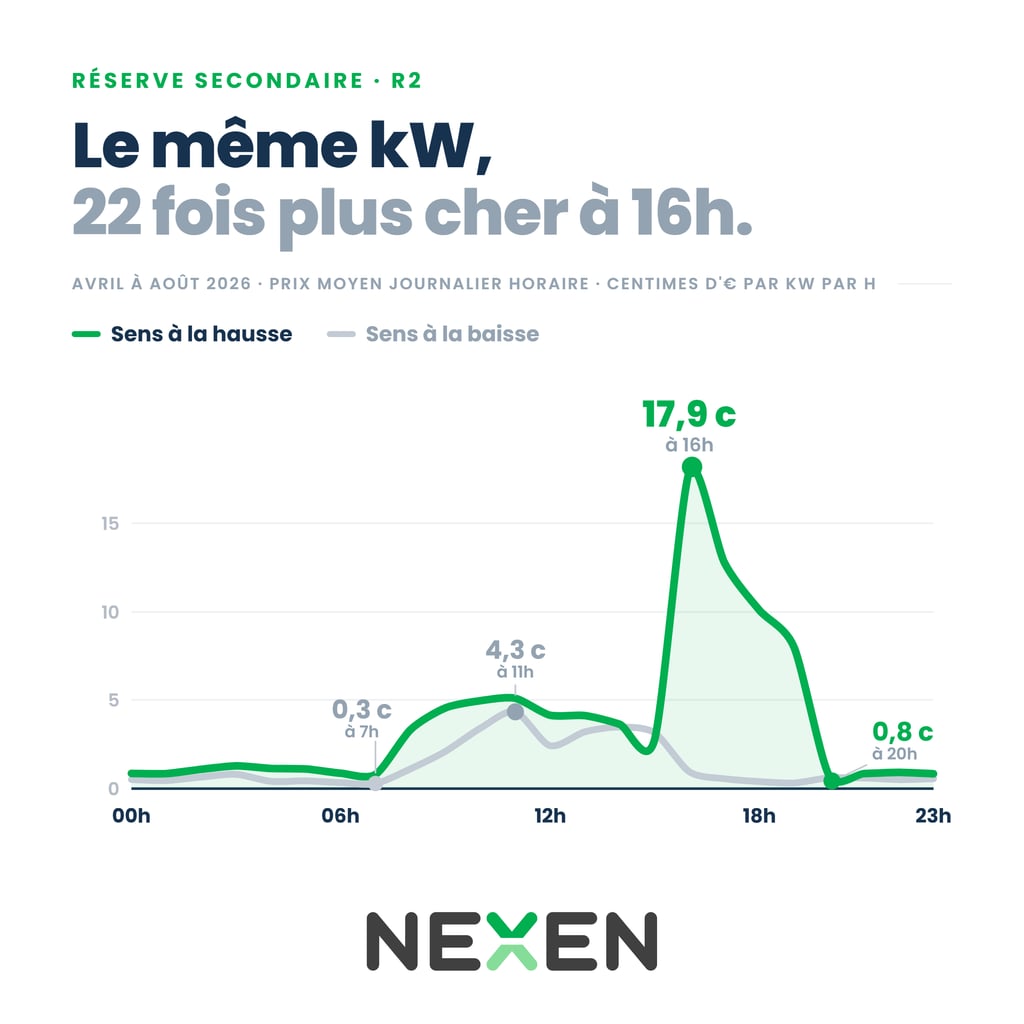
Read the articleBehind the meter, the secondary reserve competes with savings on the site's bill. Its price varies sharply through the day: up to 18 cents per kW at 16:00 in the upward direction, less than one cent at 20:00.
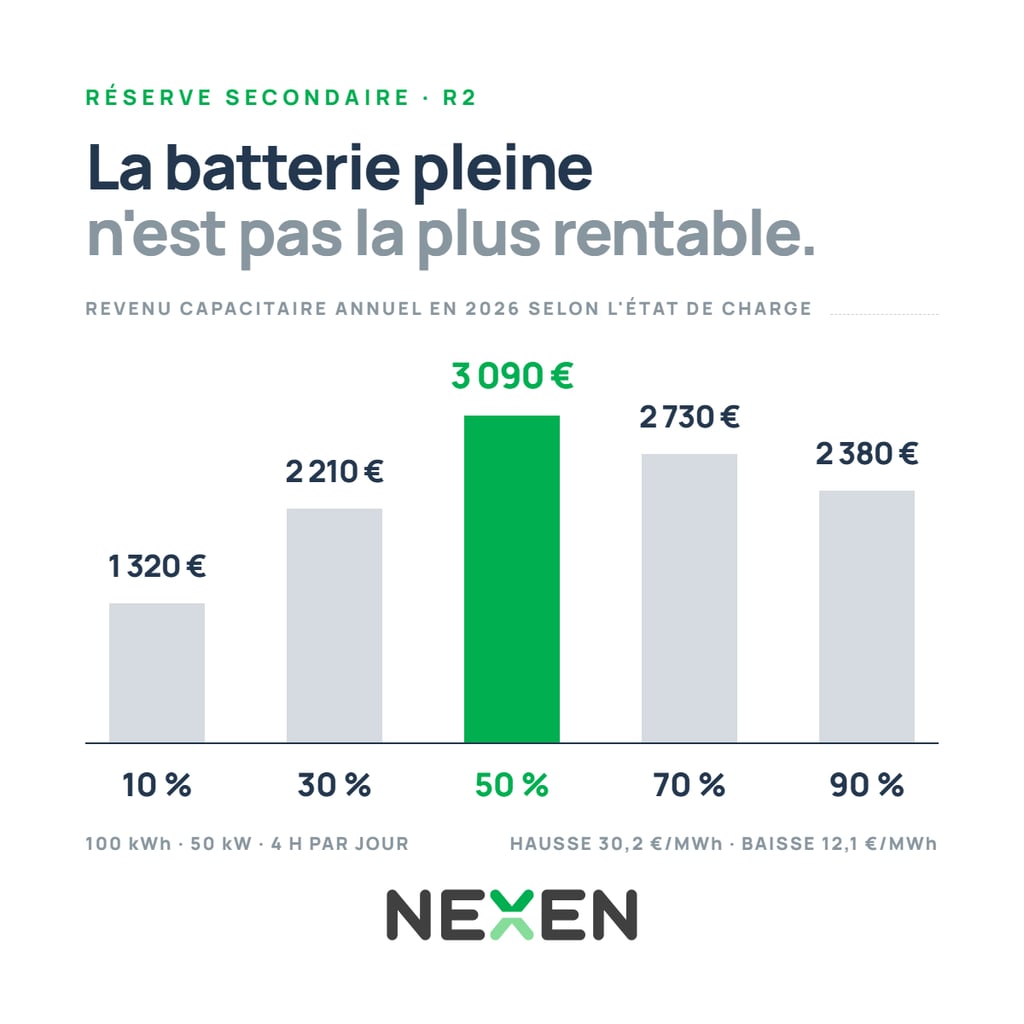
Read the articleThe secondary reserve is the best-paid mechanism per MW, and the most demanding. For a battery, the value comes from its state of charge at the time of commitment, more than from its installed power.
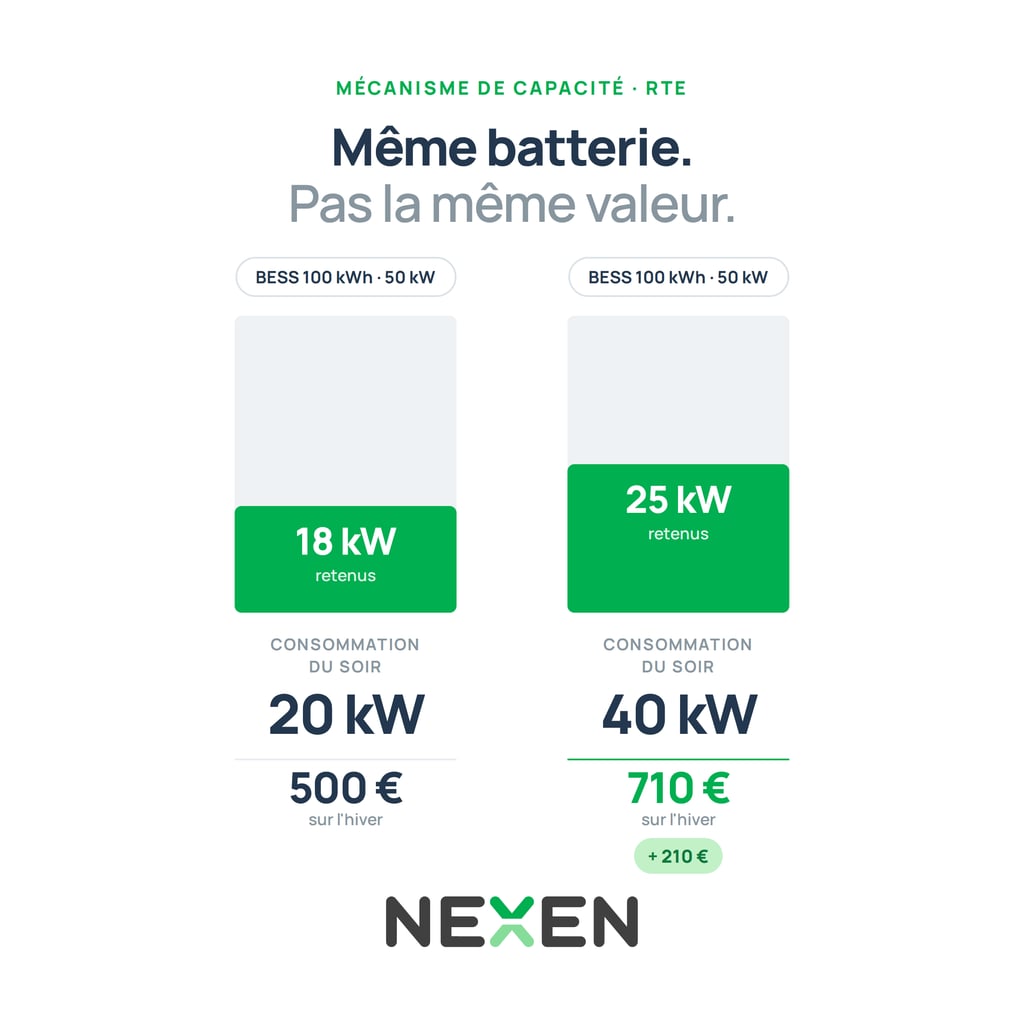
Read the articleThe capacity mechanism pays for availability during winter peaks. For a battery, the value certified depends on the reduction in grid withdrawal the site can guarantee, more than on the hardware installed.
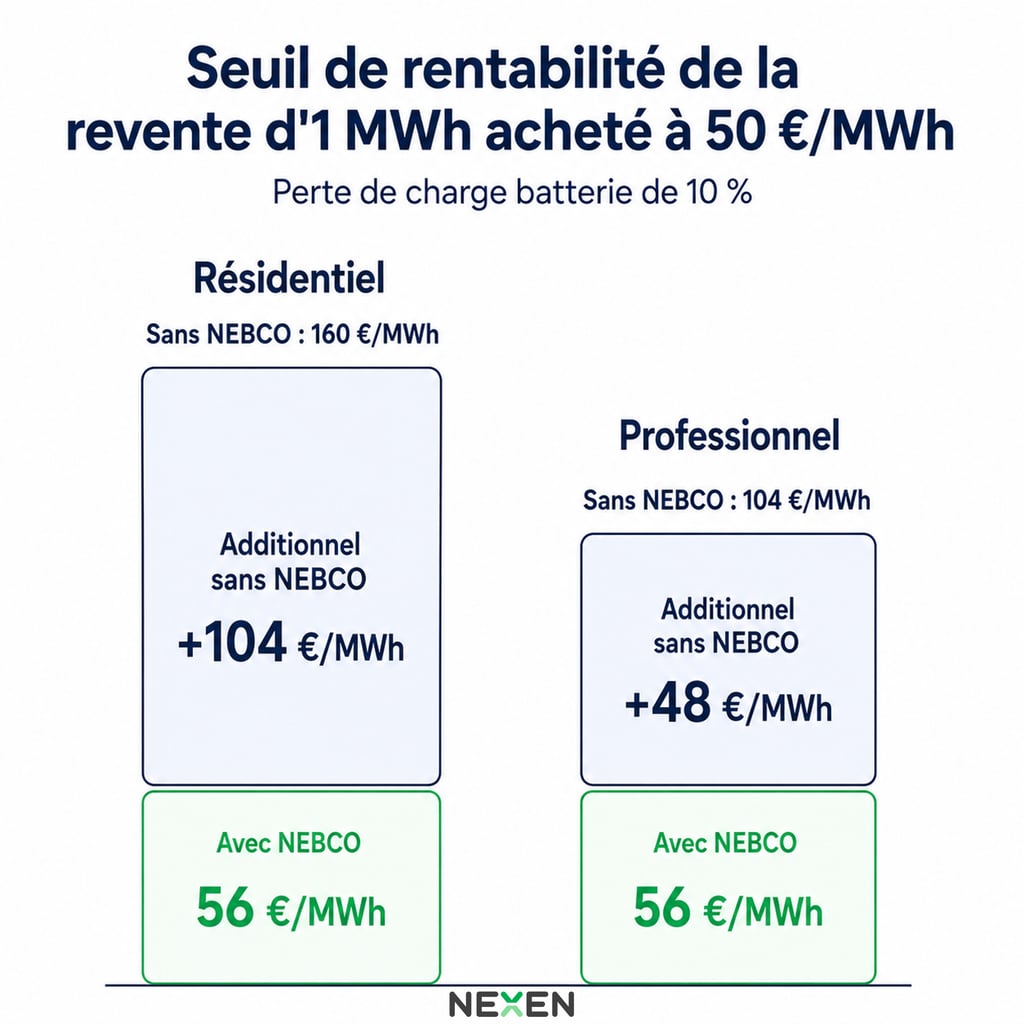
Read the articleWith NEBCO, a behind-the-meter battery shifts the site's withdrawal without changing it: energy bought on the markets carries no extra TURPE or taxes, which sharply lowers its break-even point.
Read the articleRTE requires injections and withdrawals to be balanced through balance perimeters managed by balance responsible parties. For a behind-the-meter battery, assigning these flows is a key issue.
Read the articleNexen GridTech is at Intersolar Europe 2026 in Munich to meet the European and global residential and C&I storage ecosystem.
Read the articleA site with solar panels and a battery does not simply consume or produce in gross terms: it withdraws or it injects. An explanation of the net flow measured at the electricity meter.
Read the articleA closer look at upward and downward modulations under the NEBCO mechanism for behind-the-meter batteries, and at the energy balance rules they must follow.
Read the articleA behind-the-meter battery under 1 MW can access flexibility mechanisms by aggregating several sites and controlling their net power.
Read the articleThe cut in the feed-in tariff for surplus solar to 1.1 c€/kWh speeds up the end of the passive model and strengthens the role of intelligently controlled batteries.
Read the articleBehind-the-meter and front-of-the-meter batteries both store electricity, but their business models and the way they are controlled are very different.
Read the articleA battery's revenue does not depend on its size alone: above all, it depends on the site context, how the battery is controlled and how it is aggregated.
Read the articleNexen GridTech joins the LUCIOLE association to contribute to collective thinking on electricity flexibility and self-consumption.
Read the articleWith a battery controlled by Nexen GridTech, a site with solar panels can optimise its consumption, manage its surplus solar and monetise its flexibility.
Read the articleSome flexibility mechanisms pay a battery for the capacity it makes available to the grid, even if its energy is not always called upon.
Read the articleNEBCO lets consumers monetise shifts in their consumption on the energy markets, notably with a battery installed behind the meter.
Read the articleYes, but the project has to be designed for it from day one: above 100 kWp, the feed-in premium allows charging from the grid, provided the contract with the market operator is planned accordingly.
Read the articleYes, but with a tight ceiling: under S21, the battery cannot charge from the grid, which severely limits its flexibility potential.
Read the articleSurplus feed-in tariffs, the spot market and flexibility: why the battery is becoming the new source of value for solar projects.
Read the articleOn its own, a battery's size matters little; what counts is the flexible capacity of the aggregate in which it is controlled alongside other assets.
Read the articleNo articles in this category yet.