
Solar surplus feed-in tariff cut to 1.1 c€/kWh: what does it tell us?
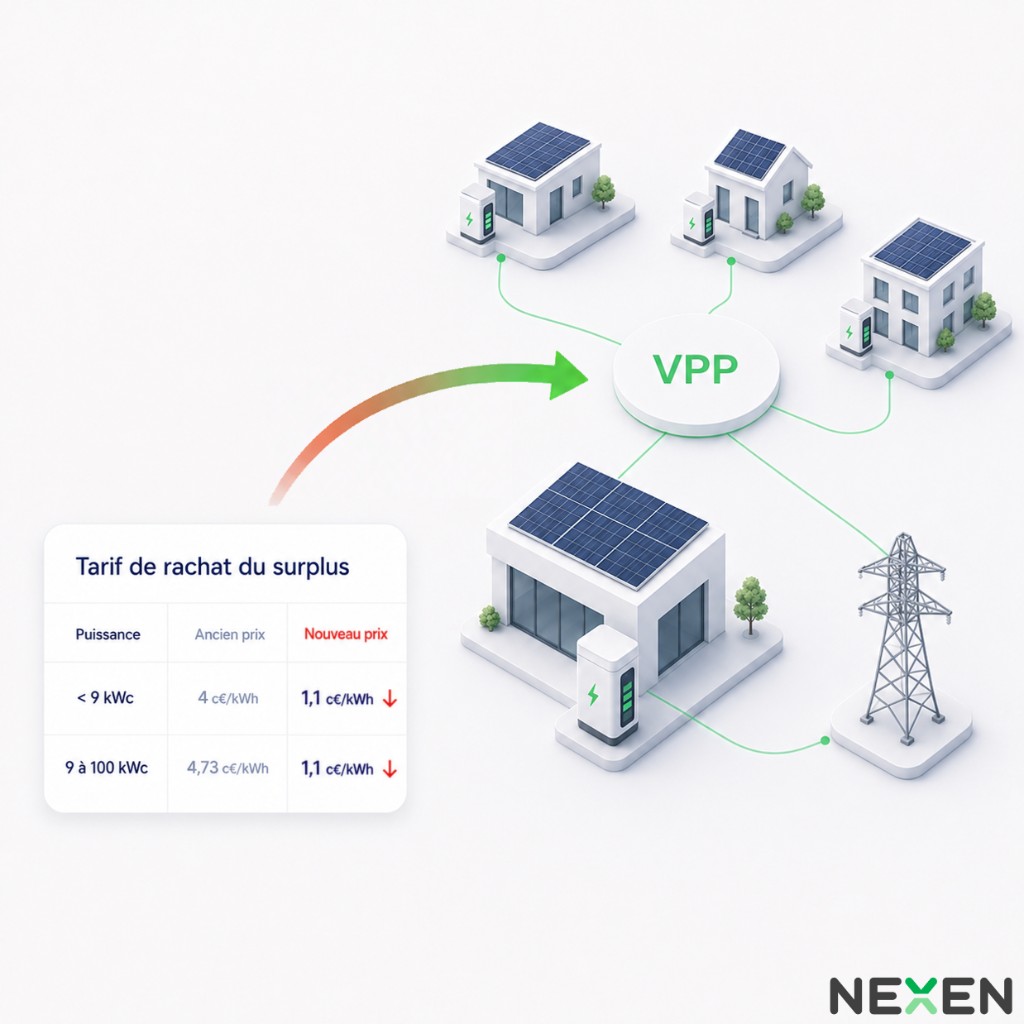
What should we take away from last week’s announcement that the feed-in tariff for surplus solar is being cut to 1.1 c€/kWh?
One thing is certain: the old business model for solar is well and truly on its way out.
Generating power, self-consuming part of it, then passively selling the surplus at a tariff high enough to lock in part of the return will no longer be possible.
You might conclude that new solar projects will now have to be built entirely around self-consumption.
Add an intelligently controlled battery to the equation, however, and that no longer holds true.
Solar projects with batteries need to become smart so they can draw on new sources of value.
Optimising consumption, not just self-consumption
Self-consumption remains worthwhile, but it is not the only way to save money.
The battery can also charge when electricity is cheaper and release that energy to the site later on. This is all the more valuable when the site is on a dynamic supply contract.
Trading on the markets rather than passively selling the surplus
The battery can also be dispatched according to market prices: buying electricity when it is cheap and selling it when prices are higher.
It can also make its capacity available to the power grid and be paid for doing so.
Value therefore no longer comes solely from the solar energy produced, but from the way the site is controlled.
Nexen GridTech exists precisely to help consumers through this shift: our battery control solution lets consumers earn more while making them active participants in balancing the power grid.