
The capacity mechanism explained for sites with batteries
The capacity mechanism explained for sites with batteries
It is one of several mechanisms a battery can take part in. It will not make a project profitable on its own, but it provides revenue known in advance, which stacks with the other sources of value.
RTE (the French transmission system operator) pays participants who commit to being available during winter consumption peaks, whether or not they are activated.
On 6 July, the first auction under the new mechanism cleared at €28,183 per MW for winter 2026-2027.
What RTE certifies is not the battery’s power rating, but the reduction in grid withdrawal the site can guarantee during the peak, and how long it can sustain it.
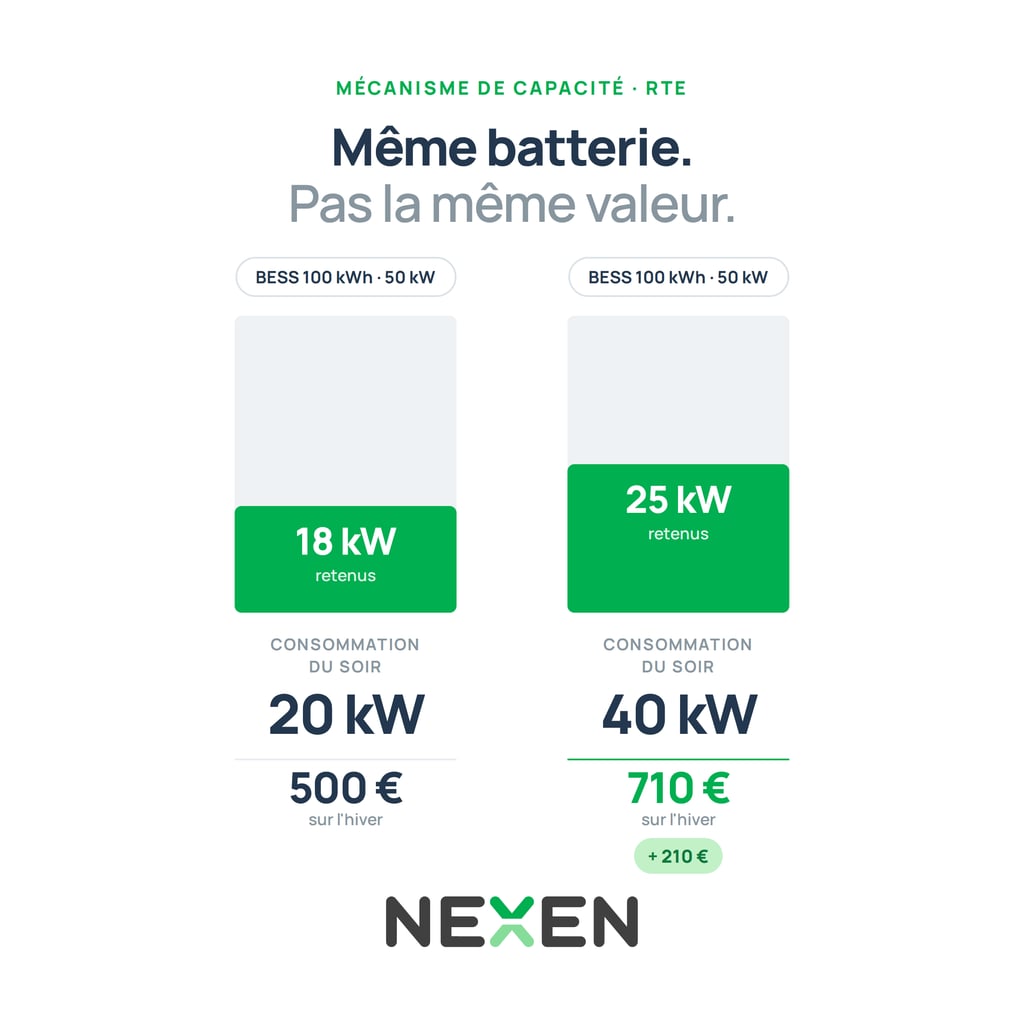
Take a typical case: a 100 kWh, 50 kW BESS on a site whose consumption is around 40 kW during evening peaks.
- The withdrawal reduction certified is 40 kW, not 50.
- At that power, the 100 kWh covers 2.5 hours, which brings the certified capacity down to 25 kW once RTE’s published duration derating is applied.
- That is roughly €710 over the winter.
On a site using only 20 kW at the same time, the same BESS would be certified at just 18 kW, or roughly €500.
So it is the site’s context that determines the value, more than the hardware installed.
One access condition remains: below 1 MW, a site cannot take part on its own. The rules require it to be grouped with others within a single certified perimeter.
That is why Nexen GridTech aggregates installations, certifies them with RTE and manages their availability during peak periods.
Our goal: to make the flexibility of sub-megawatt batteries accessible and profitable.
Do you develop, distribute or install residential or commercial batteries? Get in touch to explore what the capacity mechanism could bring to your projects.